an-Guided Weight Management
What FDA-Approved Weight Loss Medications Are Available?
A clear 2026 guide to GLP-1 medications, prescription weight loss pills, eligibility, safety considerations, and medically supervised treatment.

Weight loss medication has changed quickly in recent years. Patients now have several injectable and oral treatments to consider, including newer GLP-1 medications and established prescription pills.
However, not every medicine promoted online is approved specifically for weight management. Understanding the difference can help patients avoid misleading claims, unsafe products, and treatment plans that do not fit their medical needs.
This guide explains the main FDA approved weight loss medications, how they work, and why medical supervision remains an important part of treatment.
Important: FDA approval does not mean that every medication is suitable for every patient. A licensed provider must review your health history, current medicines, risks, and treatment goals.
What Does FDA Approval for Weight Loss Mean?
FDA approval means a medication has been reviewed for a specific use, patient group, dose, formulation, and method of administration.
A medicine approved for type 2 diabetes is not automatically approved for weight management, even when it contains the same or a similar active ingredient. The brand name, dose, formulation, and approved indication all matter.
Many long-term obesity medications are intended for adults with a body mass index of 30 or higher. They may also be prescribed to adults with a BMI of 27 or higher who have at least one weight-related medical condition. Exact requirements vary by medication.
Which GLP-1 Weight Loss Drugs Are FDA Approved?
Wegovy
Wegovy contains semaglutide and is approved for chronic weight management in qualifying patients.
It can reduce appetite, increase fullness, and slow stomach emptying.
The FDA also expanded Wegovy’s indication to reduce the risk of cardiovascular death, heart attack,
and stroke in certain adults with cardiovascular disease and overweight or obesity.
Zepbound
Zepbound contains tirzepatide. It acts on both GIP and GLP-1 pathways involved in appetite, fullness, blood sugar regulation, and food intake.
Zepbound is approved for chronic weight management in qualifying adults.
It is also approved for moderate-to-severe obstructive sleep apnea in certain adults with obesity.
Saxenda
Saxenda contains liraglutide, an established GLP-1 medication taken once daily.
The Saxenda FDA-approved indication includes chronic weight management in qualifying adults and certain adolescents
who meet the medication’s age, weight, and obesity criteria.
Foundayo
Foundayo contains orforglipron, an oral GLP-1 receptor agonist approved for qualifying adults with obesity or overweight and a related medical condition.
It is taken as a daily pill and should not be used with another GLP-1 receptor agonist.
Is Ozempic FDA Approved for Weight Loss?
Ozempic contains semaglutide, but its primary FDA indication relates to type 2 diabetes and specific cardiovascular and kidney-risk uses.
Ozempic for weight loss is therefore not the same as using a semaglutide product approved specifically for chronic weight management.
When Ozempic is prescribed only for weight reduction, the prescription is generally considered off-label.
Off-label prescribing can be medically appropriate in selected situations, but patients should receive clear information about the medicine’s official indication.
Wegovy is the semaglutide brand developed and approved specifically for chronic weight management.
Which FDA-Approved Weight Loss Pills Are Available?
Contrave
The Contrave weight loss pill combines naltrexone and bupropion.
It acts on brain pathways involved in appetite and cravings.
Contrave may not be appropriate for patients with uncontrolled high blood pressure, seizure disorders, certain eating disorders, or current opioid use.
Medication interactions and mental-health warnings must also be reviewed.
Qsymia
The Qsymia prescription medication combines phentermine and topiramate in an extended-release capsule.
It can help reduce appetite and increase feelings of fullness.
Qsymia requires strict pregnancy precautions because exposure during pregnancy can cause serious fetal harm.
Patients who can become pregnant may require pregnancy testing and effective contraception.
Orlistat
Orlistat reduces the amount of dietary fat absorbed by the digestive system.
Prescription-strength orlistat is sold as Xenical, while a lower-dose version is available over the counter as Alli.
It may cause digestive side effects and affect the absorption of fat-soluble vitamins.
Patients may need guidance about diet, supplements, and medication interactions.
Phentermine
Phentermine is FDA approved for short-term weight management, generally for a limited number of weeks.
It is a stimulant-based appetite suppressant rather than a long-term chronic weight-management medicine.
A provider should review heart rate, blood pressure, anxiety, sleep, cardiovascular history, and misuse risk before prescribing it.
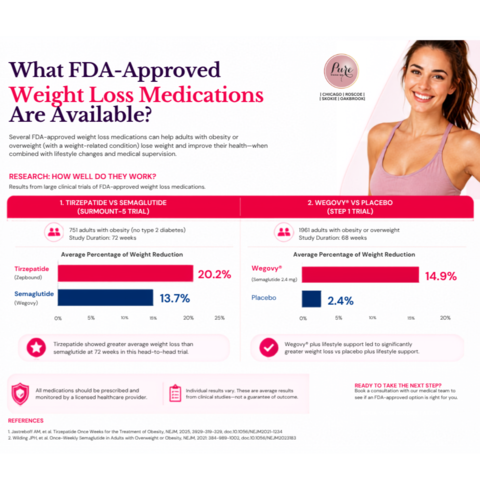
FDA-approved options include injectable and oral medications. Treatment choice depends on eligibility, health history, risks, and provider guidance.
How Does a Provider Choose the Right Medication?
There is no single best weight loss medication for every patient. A responsible medical evaluation should consider:
- Current weight, BMI, and treatment goals
- Blood pressure and cardiovascular history
- Diabetes, prediabetes, or insulin resistance
- Gallbladder, kidney, liver, or pancreatic history
- Current prescriptions and medication interactions
- Pregnancy status or pregnancy plans
- Mental-health and eating-disorder history
- Previous weight loss treatments
- Insurance coverage, cost, and medication availability
Medication works best as one part of a structured treatment plan. Follow-up care can help the provider monitor side effects, adjust the dose, review progress, and create a long-term maintenance strategy.
Why Compliance-Focused Medical Weight Loss Matters
Online advertisements often focus on price while leaving out important questions.
Who is prescribing the medication? Is the product FDA approved?
Will the patient receive proper screening and follow-up care?
A trustworthy Chicago medical weight loss program should clearly explain the prescribed product,
its approved indication, possible side effects, monitoring requirements, alternatives, and expected costs.
PURE Medical Spa uses a physician-guided approach to weight management.
Treatment decisions depend on individual medical history, eligibility, safety, and realistic long-term goals rather than a one-size-fits-all medication trend.
Frequently Asked Questions
Are all GLP-1 medications approved for weight loss?
No. Some GLP-1 medications have FDA indications for chronic weight management,
while others are approved primarily for type 2 diabetes.
Patients should confirm the exact brand and approved use with their prescriber.
Can I take two GLP-1 medications together?
Patients generally should not combine GLP-1 medicines.
Doing so may increase adverse effects without an established added benefit.
Medication transitions should be directed by a qualified provider.
Does FDA approval guarantee a medication is safe for me?
No. FDA approval means the medication’s benefits were found to outweigh its risks for an approved population and use.
Your personal medical history may still make a particular medication unsuitable.
Will insurance cover weight loss medication?
Coverage depends on the insurance plan, diagnosis, employer benefits, prior-authorization requirements, and prescribed medication.
Patients should verify benefits directly with their insurer.
Explore FDA-Approved Weight Loss Medications
The growing number of FDA approved weight loss medications gives patients more choices. It also makes professial screening and medical guidance more important.
PURE Medical Spa Locations: Chicago | Roscoe Village | Skokie/Old Orchard | Oakbrook 312-312-7873
Medical Disclaimer: This article is provided for informational and educational purposes only. It does not provide medical advice, diagnosis, or treatment. Prescription medications require an evaluation by a licensed medical provider. Eligibility, risks, side effects, results, pricing, and insurance coverage vary by patient.
Saving...```html
```